


 Paolo Loffredo, sixth generation of a large family of publishers and booksellers engaged in the production and distribution of books since the late nineteenth century, creates in 2012 the new editorial company Paolo Loffredo Editore. The historical site was until the '80s in the heart of the historic centre of Naples in Via San Biagio dei Librai, lower Decumano and also known as the SpaccaNapoli.
At the beginning of the twentieth century, Giuseppe Loffredo decided to add book selling to the book production, which definitively imposed itself after World War II with the publication of manuals for the University and for the School that succeeded in establishing themselves soon throughout Italy.
LAST EVENT
"Guerra Resistenza Liberazione. Lo sguardo delle donne"
21 Aprile 2026 - Fondazione Camillo Caetani - Palazzo Caetani - via delle Botteghe Oscure, 32 - Roma - ore 17,00

"Guerra Resistenza Liberazione. Lo sguardo delle donne"
23 Aprile 2026 - Unicusano, aula 5L - via Don Carlo Gnocchi, 3 - Roma - ore 11,00

"Lo sguardo delle donne"
25 Aprile 2026 - Centro studi Piero Gobetti - via Antonuo Fabro, 6 - Torino - ore 17,00

"Guerra Resistenza Liberazione. Lo sguardo delle donne"
05 Maggio 2026 - Università Roma 3 - Dipartimento di studi Umanistici - Aula 1 - via Ostiense, 234 - Roma - ore 15,00

"Presentazione della rivista CONTACTZONE"
15 Maggio 2026 - Salone Internazionale del libro - Padiglione OVAL - Area incontri stand Regione Campania - Torino - ore 11,30

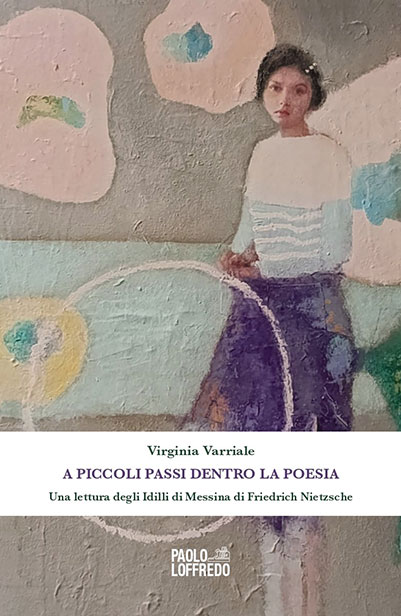
A PICCOLI PASSI DENTRO LA POESIA
ISSN :
Language: Italian
Publisher: Paolo Loffredo Editore Srl

Description
A PICCOLI PASSI DENTRO LA POESIA
Una lettura degli Idilli di Messina di Friedrich Nietzsche
The work A piccoli passi dentro la poesia is a meditation on the meaning of poetry through the polyphony of multiple literary genres, from twilight lyricism to philosophical reflection. Artistic creation becomes an instrument of knowledge of reality, a magnifying glass capable of capturing the essential, which sometimes hides in the folds of everyday life, or reveals itself suddenly, where the work of imagination is not always necessary. The work is divided into two parts. The first part - Poems - is a collection of verses, in which the lyrical self searches for the blueness of things, sees in the other a possibility of conversation, harmonizes the heartbeats with the movement of Nature, experiences the pathos of distance so as not to betray himself and questions the curvatures of reality, sensing that happiness is in the "while". The second part – A reading of Friedrich Nietzsche’s Idylls of Messina – offers an accurate interpretation of the eight compositions written in Genoa between February and April 1882. The author invites us to get to know more deeply the poetic nature of Friedrich Nietzsche, which does not clash with the philosophical one, but rather supports it. When the philosopher struggles, the poet arrives and offers him a hand on the terrain of the word, because the poetic word knows how to re-say what the philosopher hears in the silence of his thought.